Monday, 23rd March
Iron Age gold art in Norway | Did King Harold sail to Hastings? | Neolithic road in Somerset | War Crimes archaeology in Ukraine

‘Little Old Man of Gold’ - ‘Sensational’ Iron Age gold foil figures found in Norway
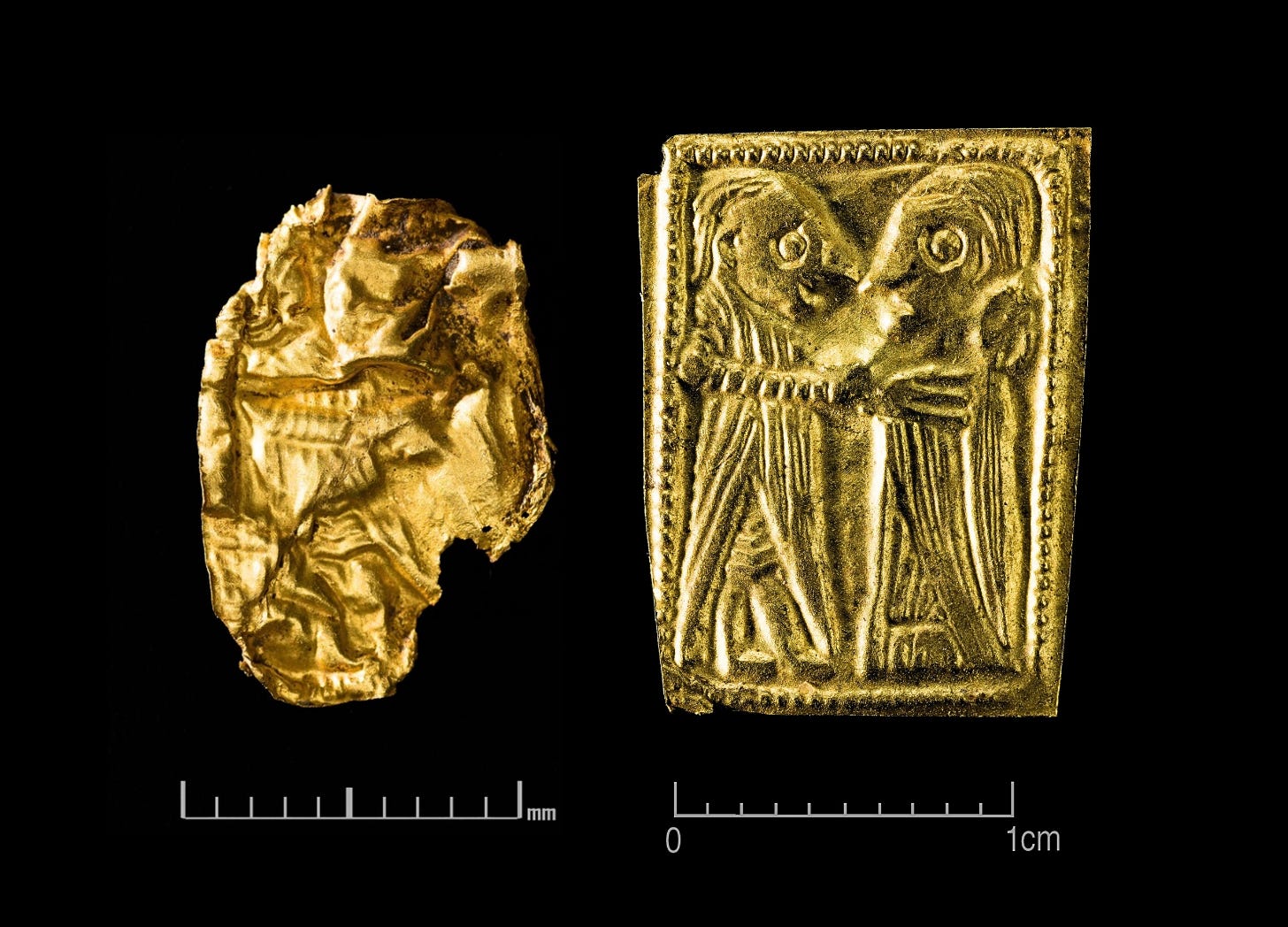
A tiny piece of Late Iron Age gold foil - a possible votive offering known as a gullgubbe or ‘little old man of gold’ - has been found in Rogaland, Norway.
The first found in the region for nearly 130 years, gullgubber are thought to have had amuletic or cultic properties. They are associated with elite power centres and, in particular, high-status ritual activity at aristocratic halls, where the gold foils are often found in the postholes, perhaps used as foundation offerings.
Around 4,000 of the minute embossed foils have been found in Scandinavia, with most findspots in Denmark and only about 50 from Norway.
Gullgubber date to between c. AD 500 and 800, and are usually stamped with human figures often in the form of couples in affectionate poses, as seems to be the case for the latest find, the surviving fragment of which appears to preserve the male figure.
Sigmund Oehrl, Professor of Archaeology at the University of Stavanger, notes that the couples depicted in gullgubber may be the Norse sibling gods Freyr and Freyja, or, more simply, a human married couple.
In 1897, 16 gullgubber were found in the same area as the new discovery from Hauge, Klepp, with the latest find discovered and reported by detectorist Kjetil Særheim.

Oehrl told AWLOH that, given the association of gullgubber with halls, and the pre-existing signs of elite activity and burial in the area:
‘We are hopeful that the exact coordinates provided by the responsible metal detectorist can help us locate this special location’s presumed central aristocratic hall and tell us about elite power in the region’.

KNOW MORE
Rogaland fylkeskommune: Sensasjonelt gullfunn – første av sitt slag i Rogaland siden 1897
NTB / Universitetet i Stavanger: Sensasjonelt gullfunn på Jæren (web translations available)

Quick March or Ship Shape? A new theory on Harold’s Hastings dash takes sail
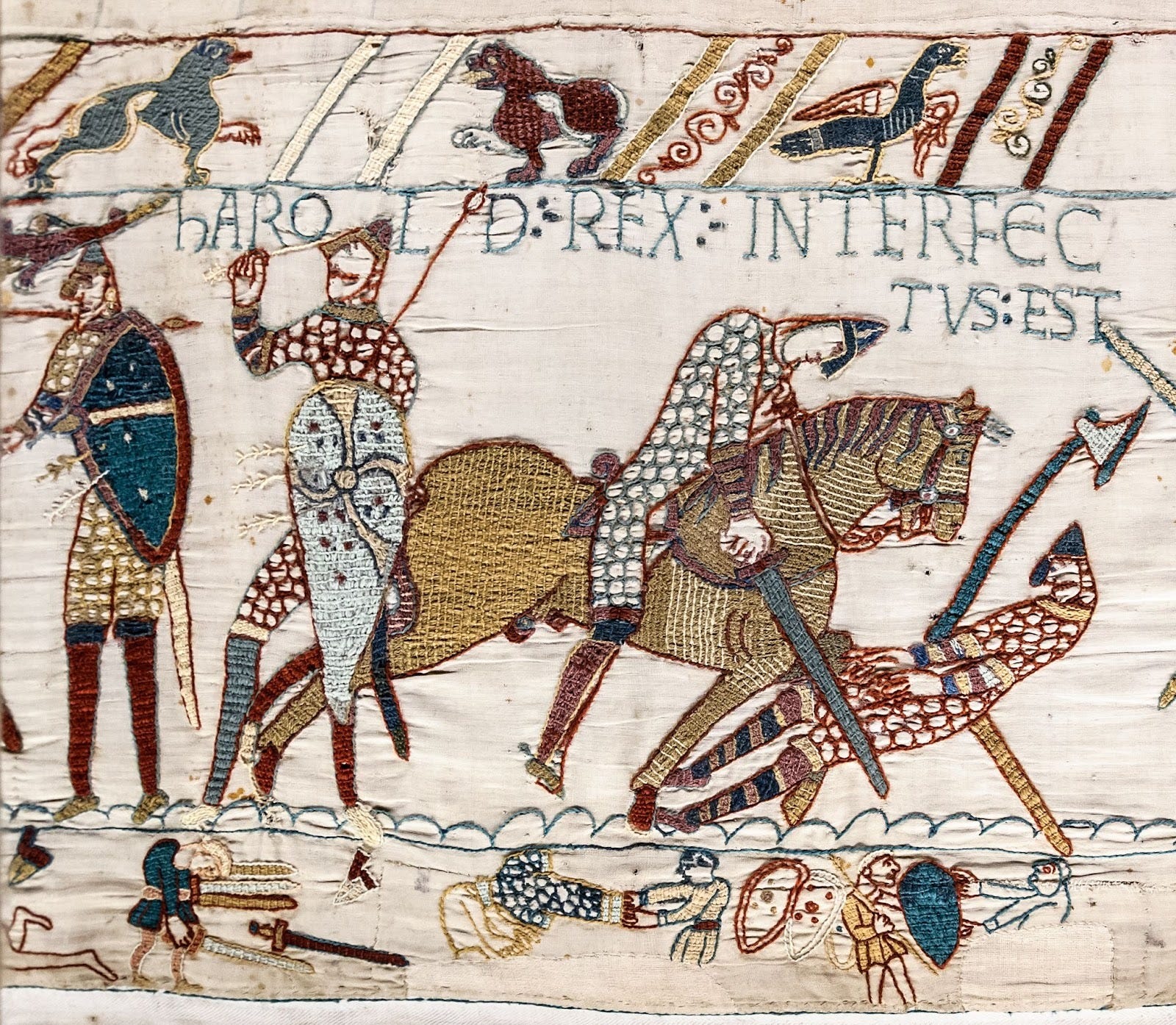
A study into King Harold’s supposed 200-mile march from Stamford Bridge to Hastings suggests that the journey may, in fact, have been made by sea.
Professor Tom Licence of the University of East Anglia suggests that an influential Victorian interpretation of the events of September and October 1066 - as recorded in some versions of the contemporary annals known as the Anglo-Saxon Chronicle - wrongly concluded that Harold’s fleet had been disbanded in early September, prior to the Battle of Stamford Bridge, which took place near York later the same month.
Licence argues that the phrase about Harold’s ships ‘coming home’ was misinterpreted as meaning that his naval force, and its ability to ferry troops along the English coasts, had been dispersed, leading to an assumption that Harold marched his troops both to Yorkshire and, at punishing speed, to Hastings soon afterwards, with the associated fatigue presumed to have been a major factor in his defeat by William of Normandy.
According to Licence: ‘Harold’s ‘missing’ fleet was used to defend the south coast, then to support his campaign against Harald Hardrada, and finally to rush back south after the Battle of Stamford Bridge ready to face Duke William of Normandy.’
While remaining a hypothesis, it is true that no contemporary chronicle describes a march between Stamford Bridge and Hastings - using only phrases like ‘Harold came from the north’ - and also correct that future interpretations of Harold’s crucial military manoeuvres in September and October 1066 will have to take account of Licence’s theory.
KNOW MORE
UEA: English history’s biggest march is a myth -King Harold sailed to the Battle of Hastings
Project Guttenberg: Anglo-Saxon Chronicle

Water Old Road! Neolithic trackway preserved by Somerset peat

Archaeologists in Honeygar have discovered a 6,000-year-old wooden trackway used by Neolithic communities to cross boggy ground in the Somerset wetlands.
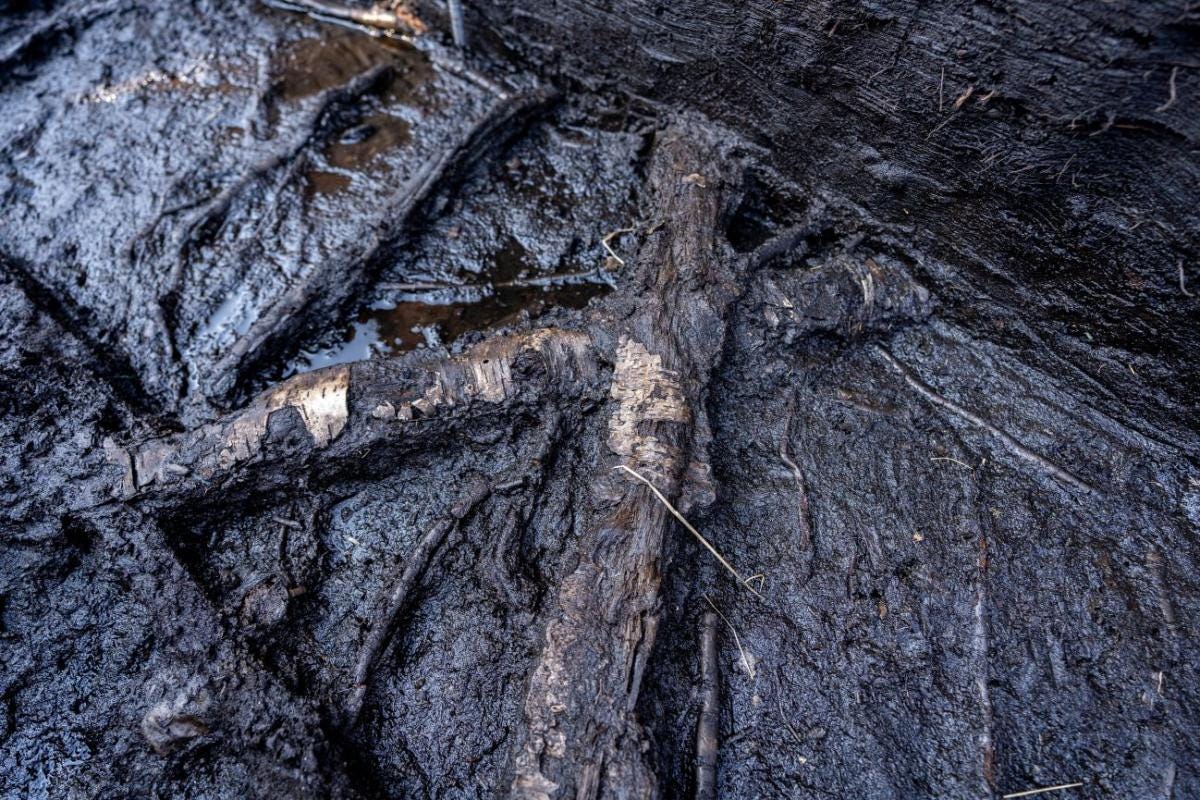
The trackway, preserved under oxygen-starved anaerobic peat, was built from birchwood poles and brushwood, and has been radiocarbon dated to between 3,770 and 3,640 BC.
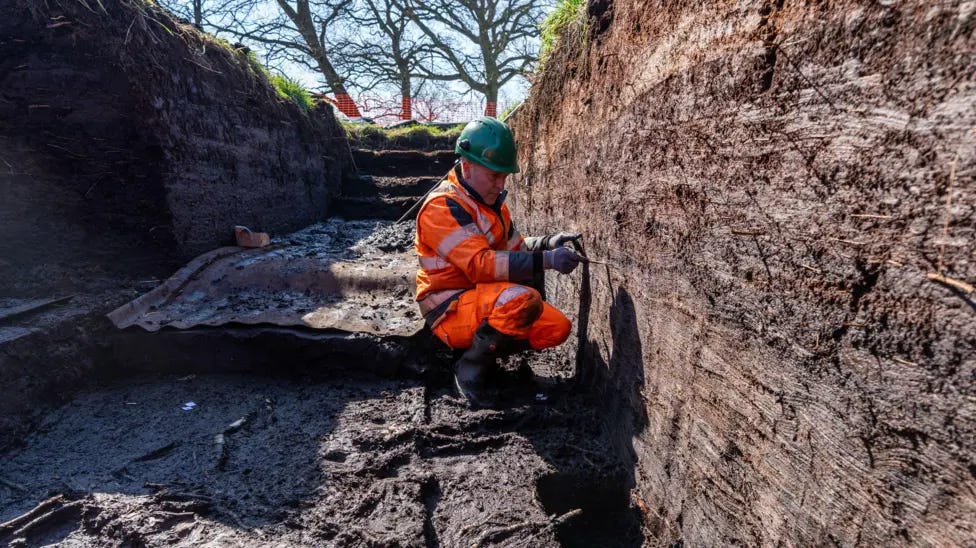
Preservation of organic remains such as wood, pollen, and insects from prehistory is rare unless preserved by anaerobic conditions, making the discovery by Wessex Archaeology of particular importance to the ongoing investigations of the prehistoric landscape as researchers seek to recreate the ancient wetland habitats.
KNOW MORE
Wessex Archaeology: 6,000-year-old Prehistoric Pathway Discovered in Somerset
BBC: Neolithic trackway discovered by archaeologists

Dark Heritage: The contemporary history of a Russian war crime in Ukraine
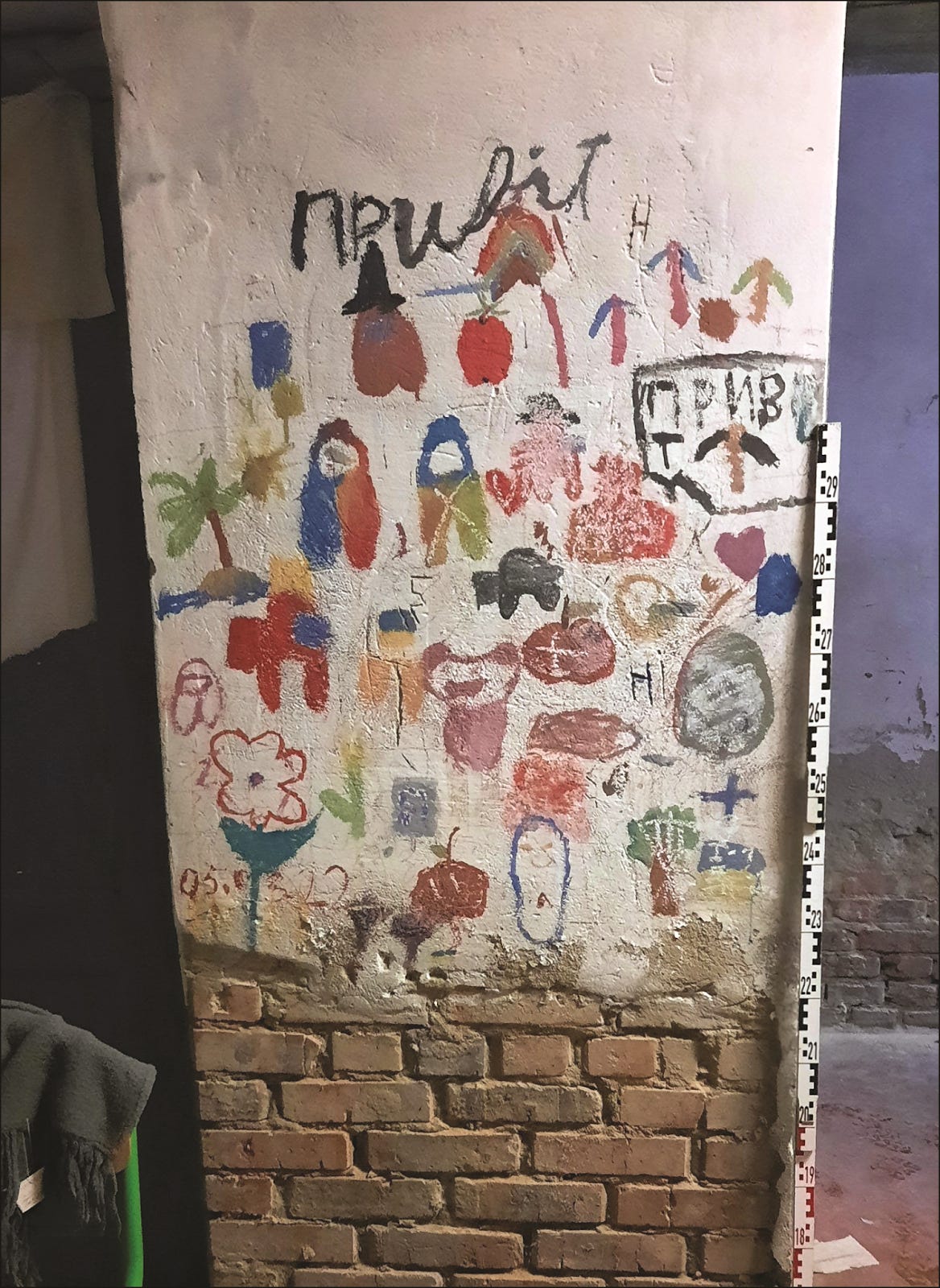
A new study, published in Antiquity, investigates the events of March 2022, when Russian soldiers locked civilians in the basement of a school in Yahidne for 27 days.
Over 350 civilians, aged between six weeks and 93 years old and including 69 children, were illegally imprisoned in a small school basement near Chernihiv between the Russian invasion of northern Ukraine and the successful Ukrainian counter-offensive.
For the study, Dr Grzegorz Kiarszys of Szczecin University and Marek Lemiesz of the National Institute of Cultural Heritage of Poland examined evidence of both the Russian military occupation and the material culture used and created by the civilian prisoners.
Kiarszys noted that the study ‘examined everything from children’s wall drawings, abandoned toys and school textbooks to half-eaten military rations, propaganda newspapers, spent military equipment and damaged infrastructure’.
‘Perhaps the most meaningful contribution of our work, highlighting the social and ethical role of archaeology,’ Kiarszys added, ‘is that it has helped to acknowledge the Yahidne crime, tell the story of the survivors, and contribute to the dissemination of knowledge about the tragic events that took place in Yahidne’.
Plans are now being made to turn the school into a museum and memorial.
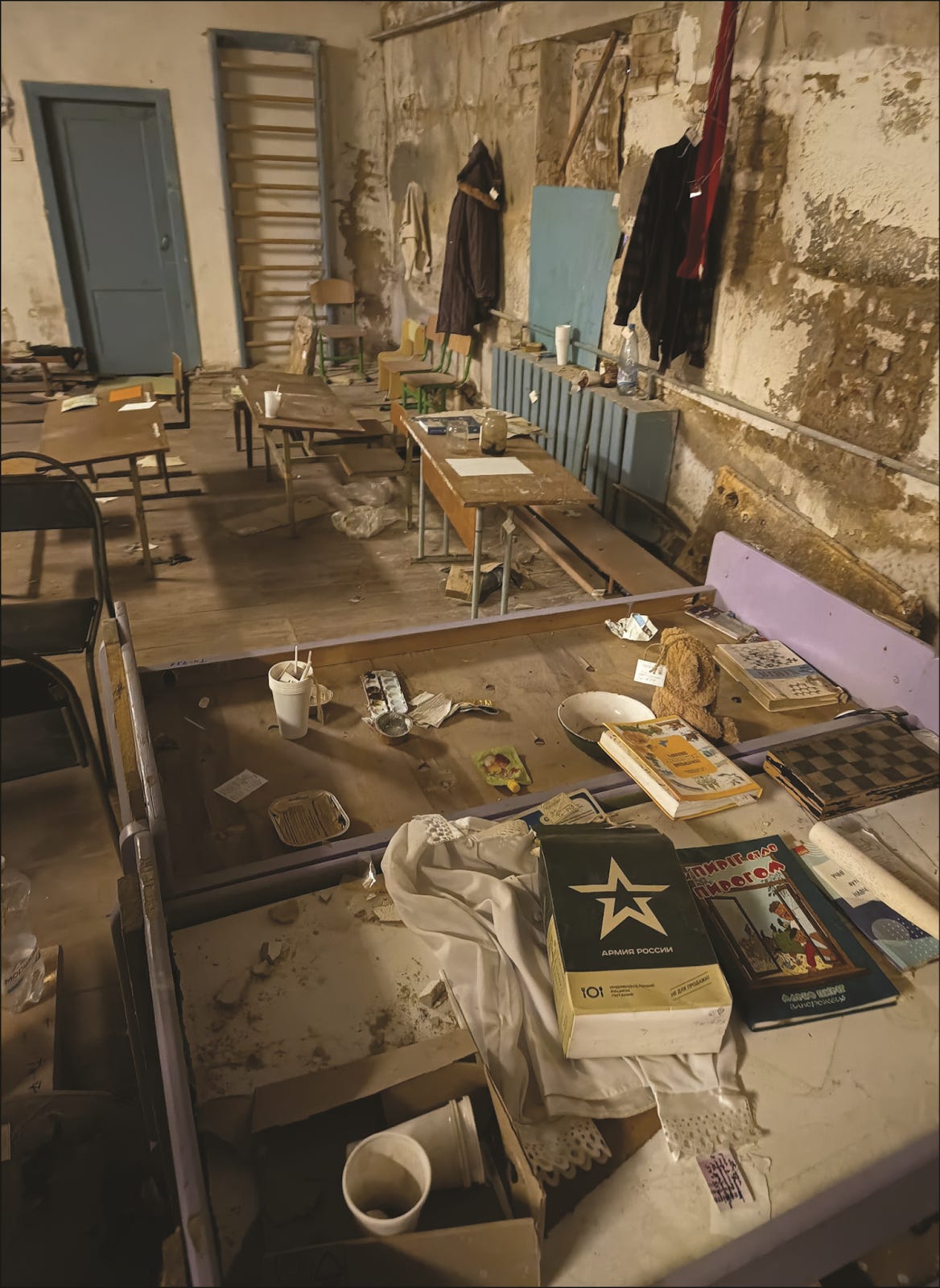
KNOW MORE
Antiquity: Spectres of violence: contemporary archaeology of the Yahidne war crime – Grzegorz Kiarszys, Marek Lemiesz (2026)

HISTORY HIGHLIGHTS

These gems caught the AWLOH eye!
Substack Recommendation
Lucy Worsley - My Life in the Past
Book
Talking Classics: The Shock of the Old, by Mary Beard (16th April, 2026)

In Talking Classics, Mary Beard points to the surprising connections between antiquity and the present. From revolutionaries to dictators, Bob Dylan to Beyoncé, she joins forces with the varied modern characters who have been transfixed by the ancient world. It’s not compulsory, she argues, to be excited by antiquity, but it’s a shame not to be (Profile Books)
Exhibition
Maps: Memories from the Second World War

Saturday 9 March 2024 – Sunday 4 October 2026
National War Museum, Edinburgh
Paid admission to Edinburgh Castle required to see the (free) exhibition
Between 1939 and 1945, over 3 billion maps were produced for the Allied, Soviet and German forces. Used to navigate the jungles of south-east Asia, or for devising an escape plan, the maps on display are now mementoes. Maps kept alongside medals and photographs to say ‘I was there.’ (NWM)
Sex and Alcohol in the Middle Ages | Full Series with Eleanor Janega
Join Eleanor Janega in this 3-Part series as she explores the world of Medieval Pleasures.
In episode one, Eleanor and Dr Kate Lister take to the streets of York to uncover the sex lives of folks living here over 500 years ago. Armed with Medieval chat-up lines they attempt to woo a suitor while revealing the hidden ribald meanings behind some common words and phrases, giving an insight into the diverse, bold and unabashed sexual appetites of Medieval people and the role the church had in controlling the sex lives of worshippers.

TODAY IN HISTORY

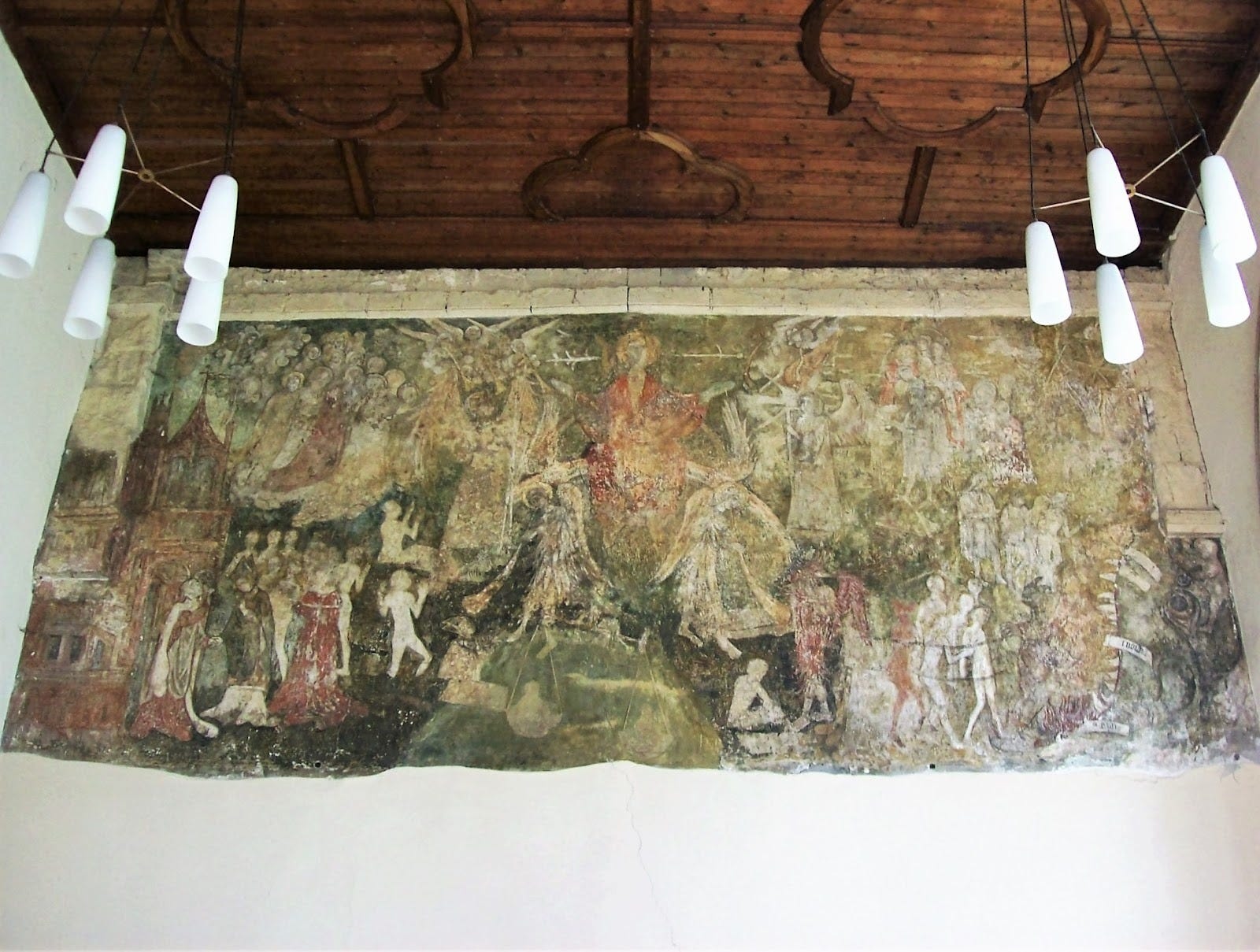
Dissolution of ‘The Last Abbey’
On this day in 1540, Waltham Abbey in Essex was surrendered to Henry VIII’s commissioners by its Abbot, Robert Fuller. As such, it was the last abbey dissolved formally in the process known as the dissolution of the monasteries.

PHOTO OF THE DAY

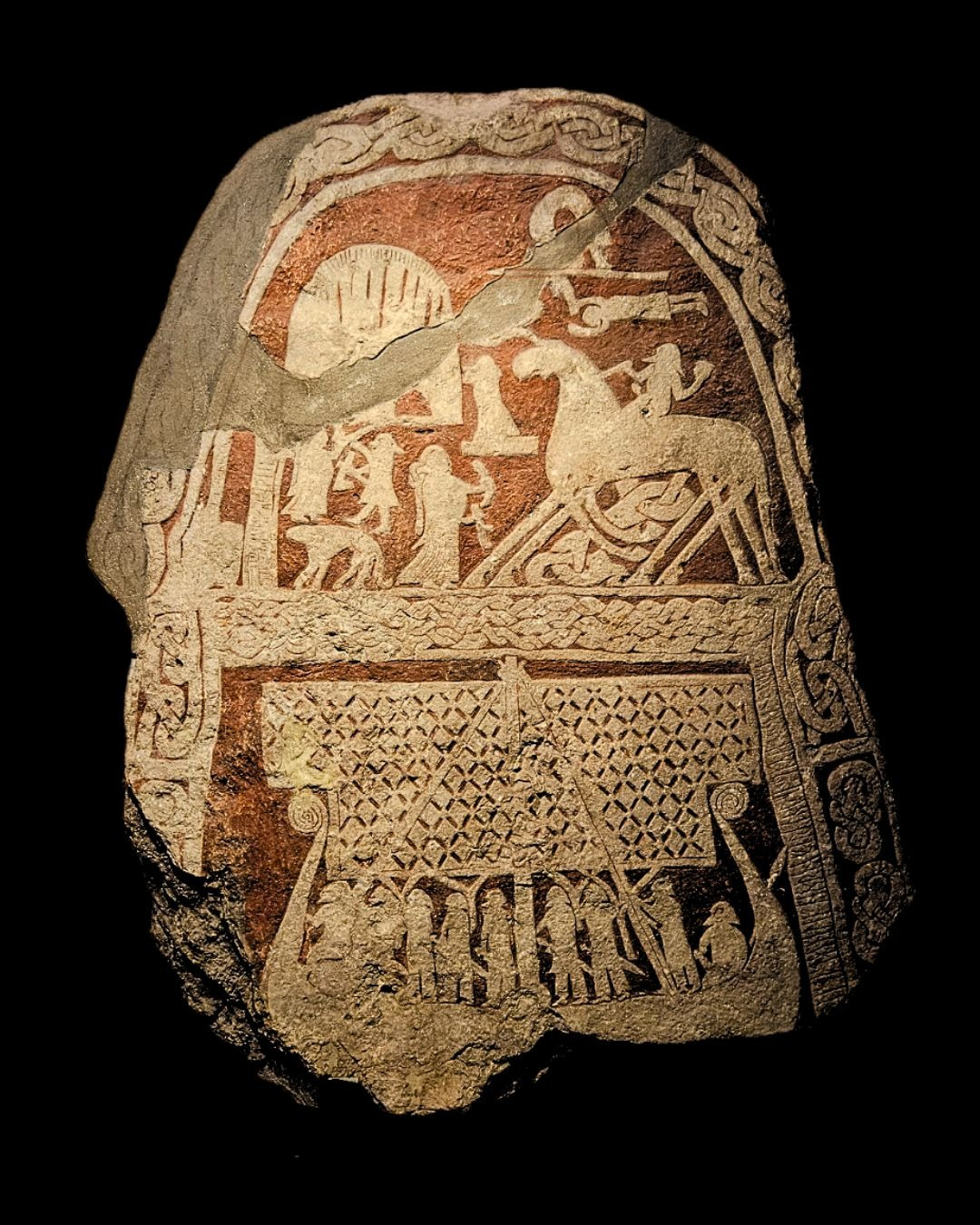
A presumed valkyrie with a drinking horn greets a horseman - who may have ridden from the longship below - on an eight-legged horse, possibly Odin’s Sleipnir.
This Gotlandic picture stone from Alskog Tjängvide almost certainly depicts the welcome of a fallen warrior to Valhalla.

QUOTE OF THE DAY